Angeles Montero
Airbnb - Solo travel
UX Research - Improving the solo travel experience on Airbnb
Project Overview
Details
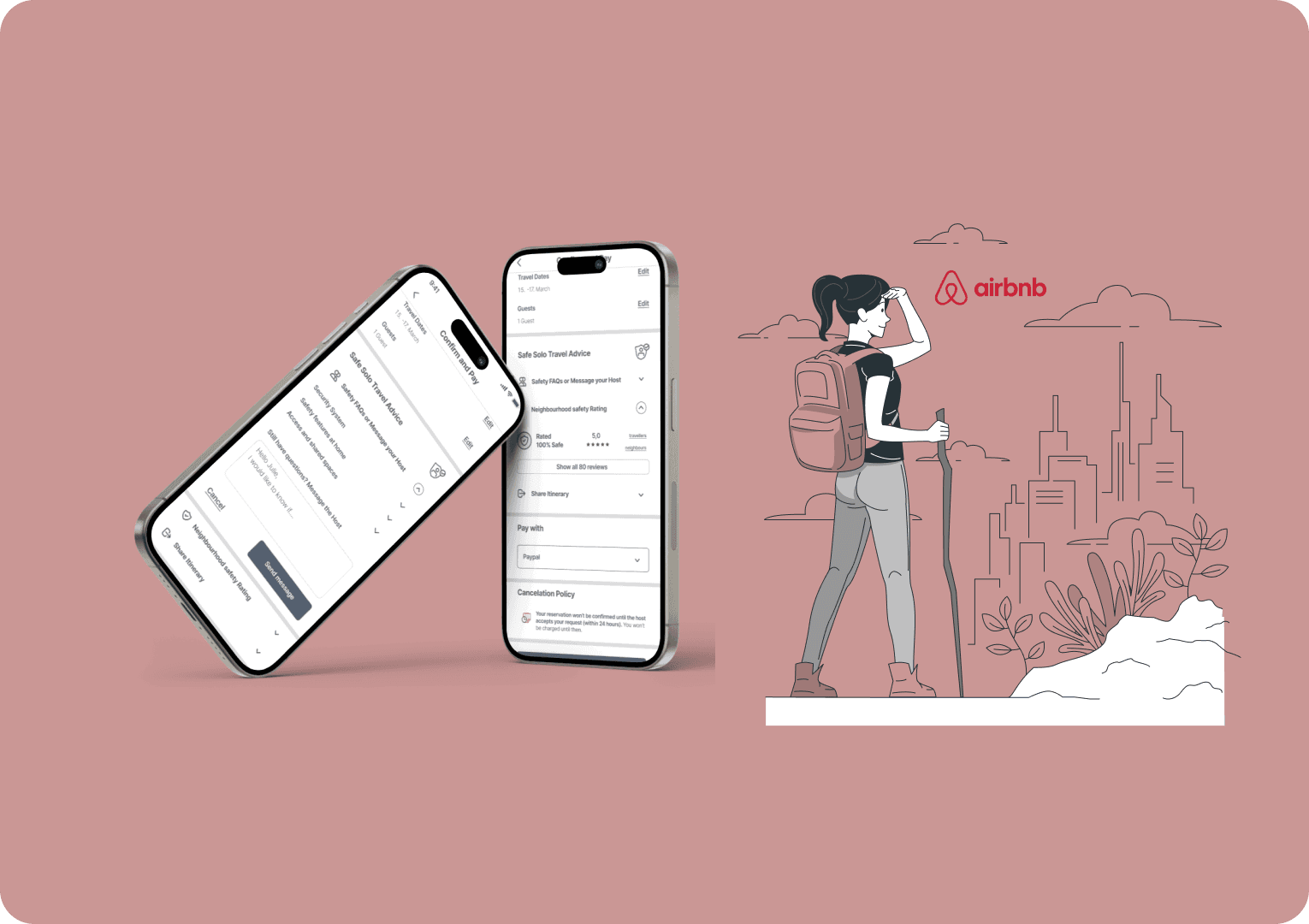
This research project for my Master's in UX/UI Design at LABASAD demonstrates my UX research skills. I designed the "Safe Solo Travel" feature for the Airbnb app, aiming to improve safety and confidence for solo travellers through user-centred insights.
Client:
LABASAD Master
My Role:
UX/UI Designer
Year:
2024
Scope of work
UX Research, UX/UI Design, App Design
Research Process
Research goals
🔵 Understand User Concerns: Identify solo travelers' pain points.
🔵 Align with Business Needs: Focus on safety to enhance Airbnb’s value.
🔵 Drive Measurable Impact: Develop solutions based on data.
Research methodology
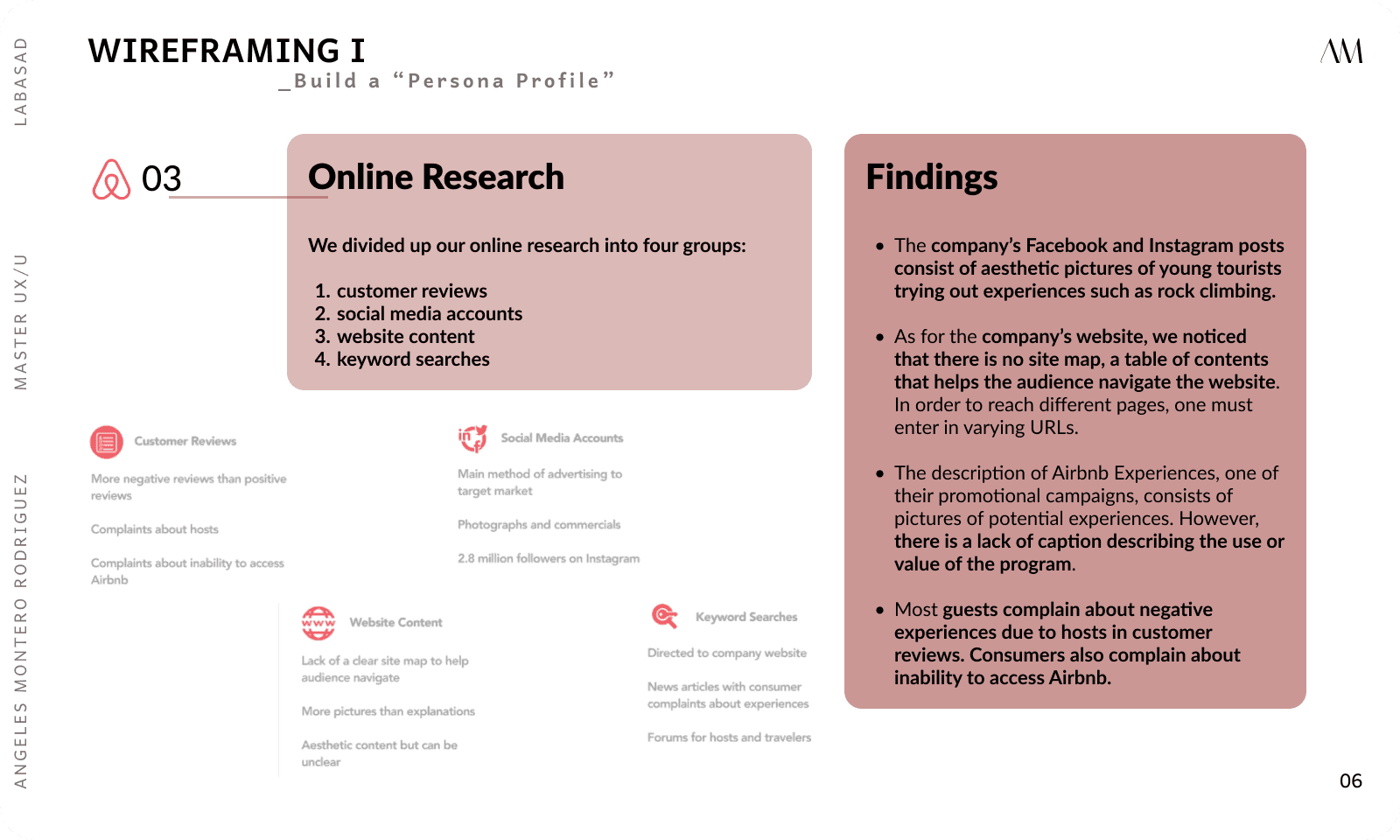
Online Research: Analyzed reviews, social platforms, and competitor practices.
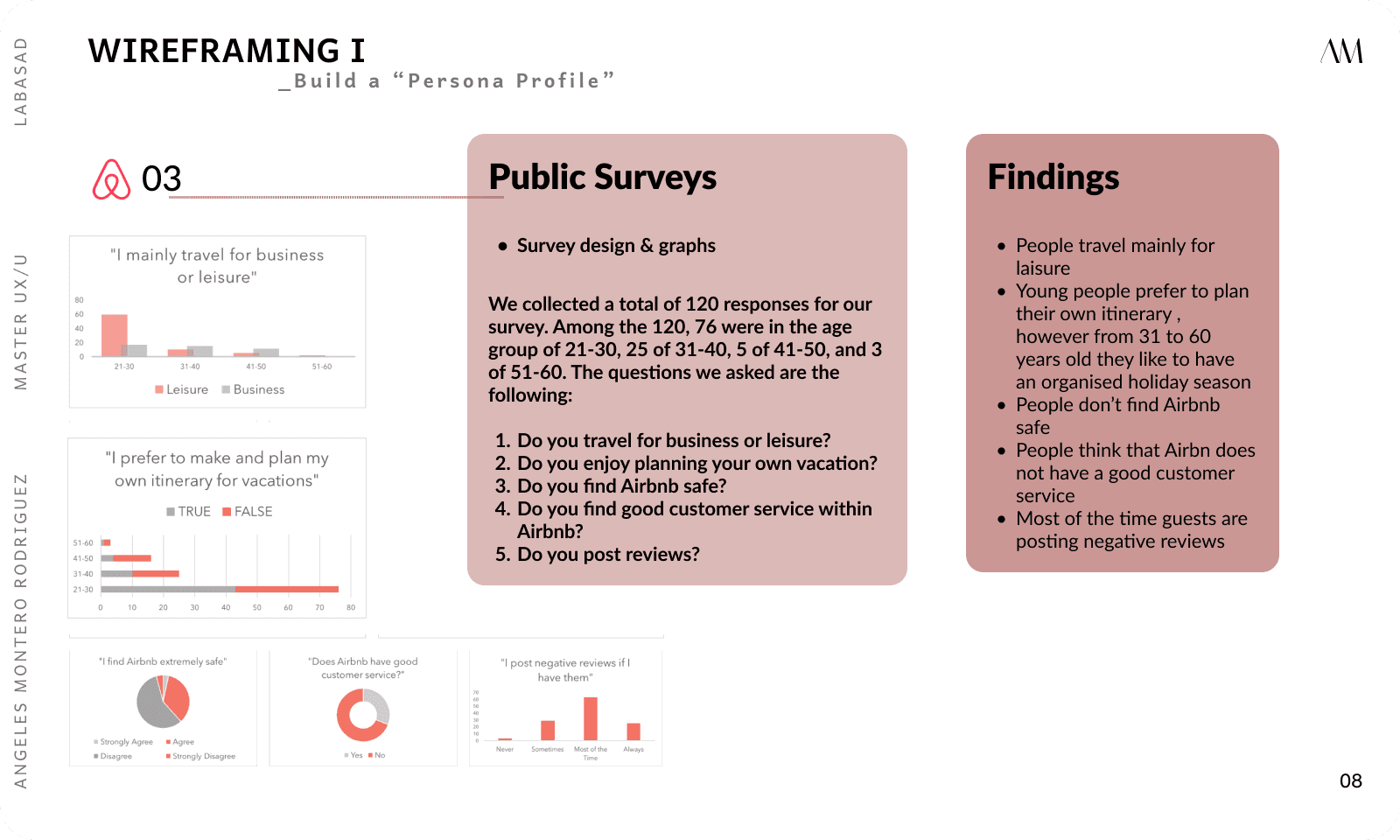
Public Surveys: Collected insights from 120 travelers, uncovering safety concerns.
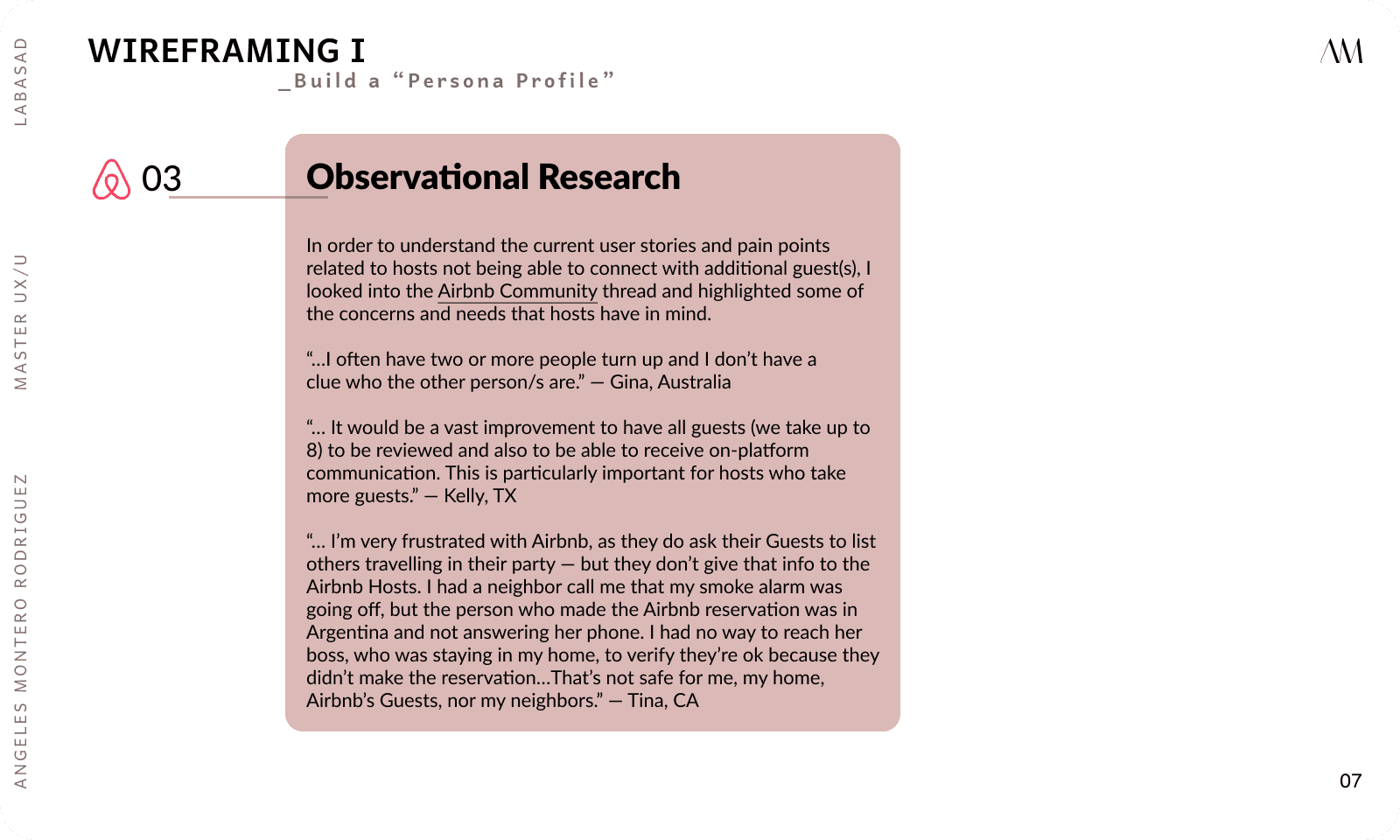
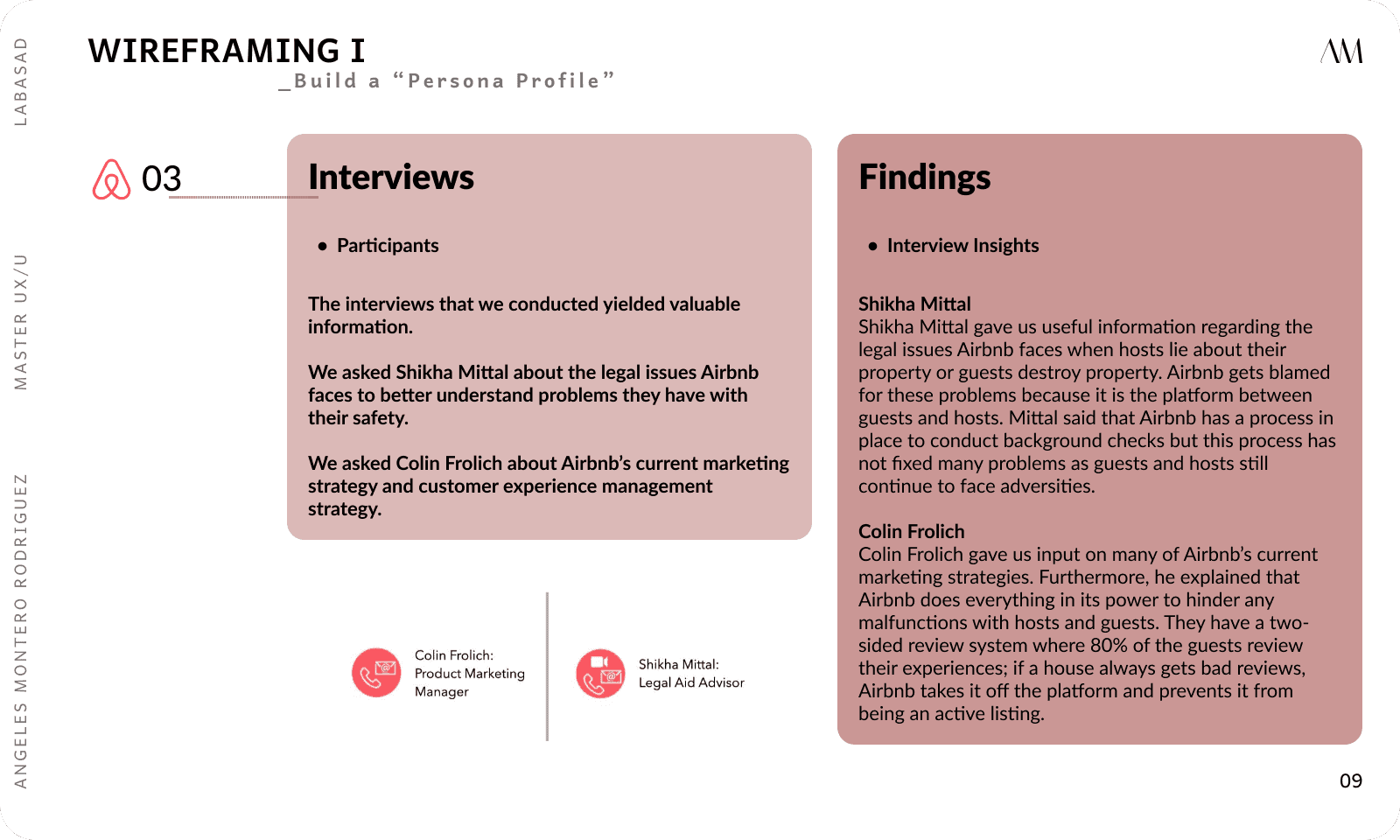
Interviews: Gathered information from safety experts and solo travelers to understand their experiences.
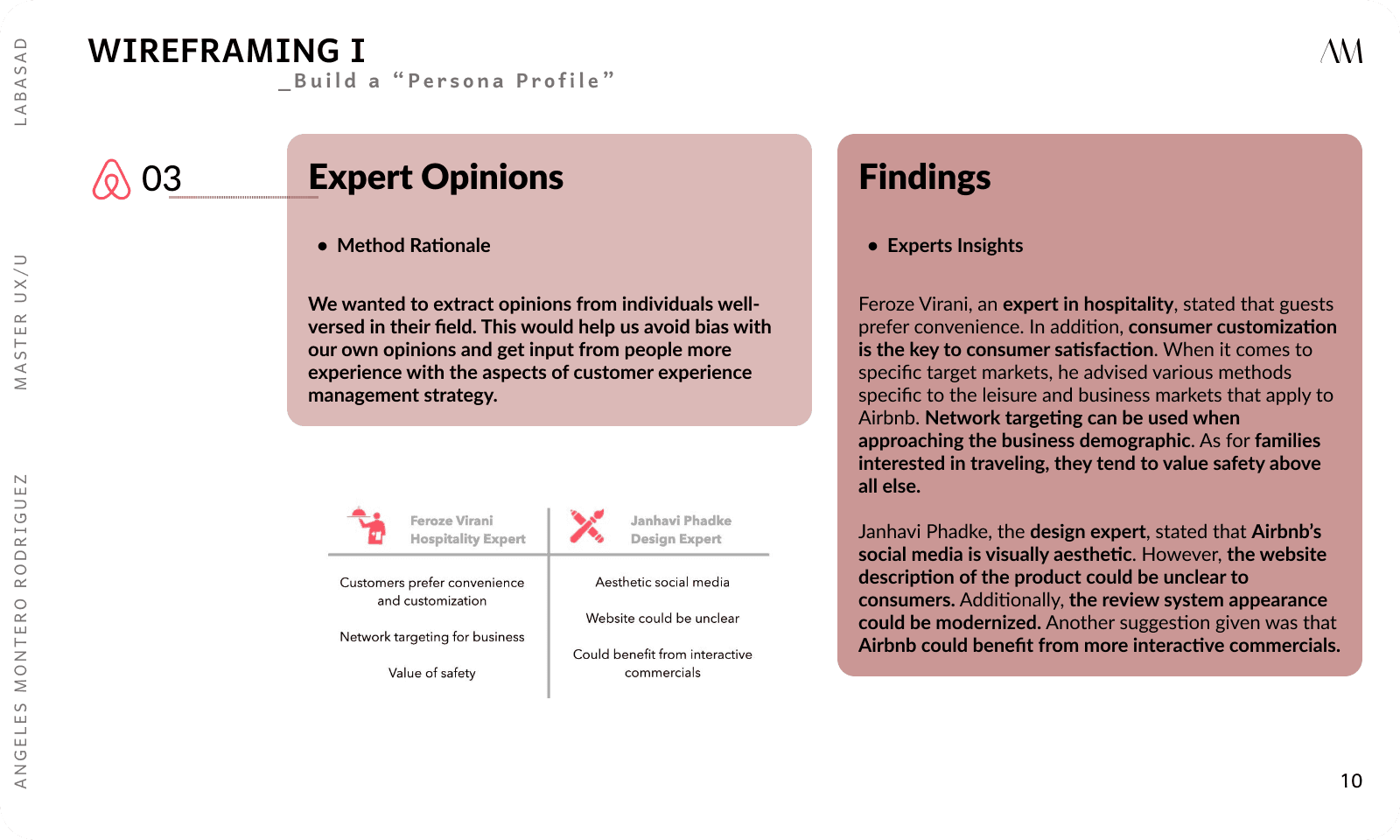
Expert Opinions: Gathered perspectives from hospitality and UX professionals.
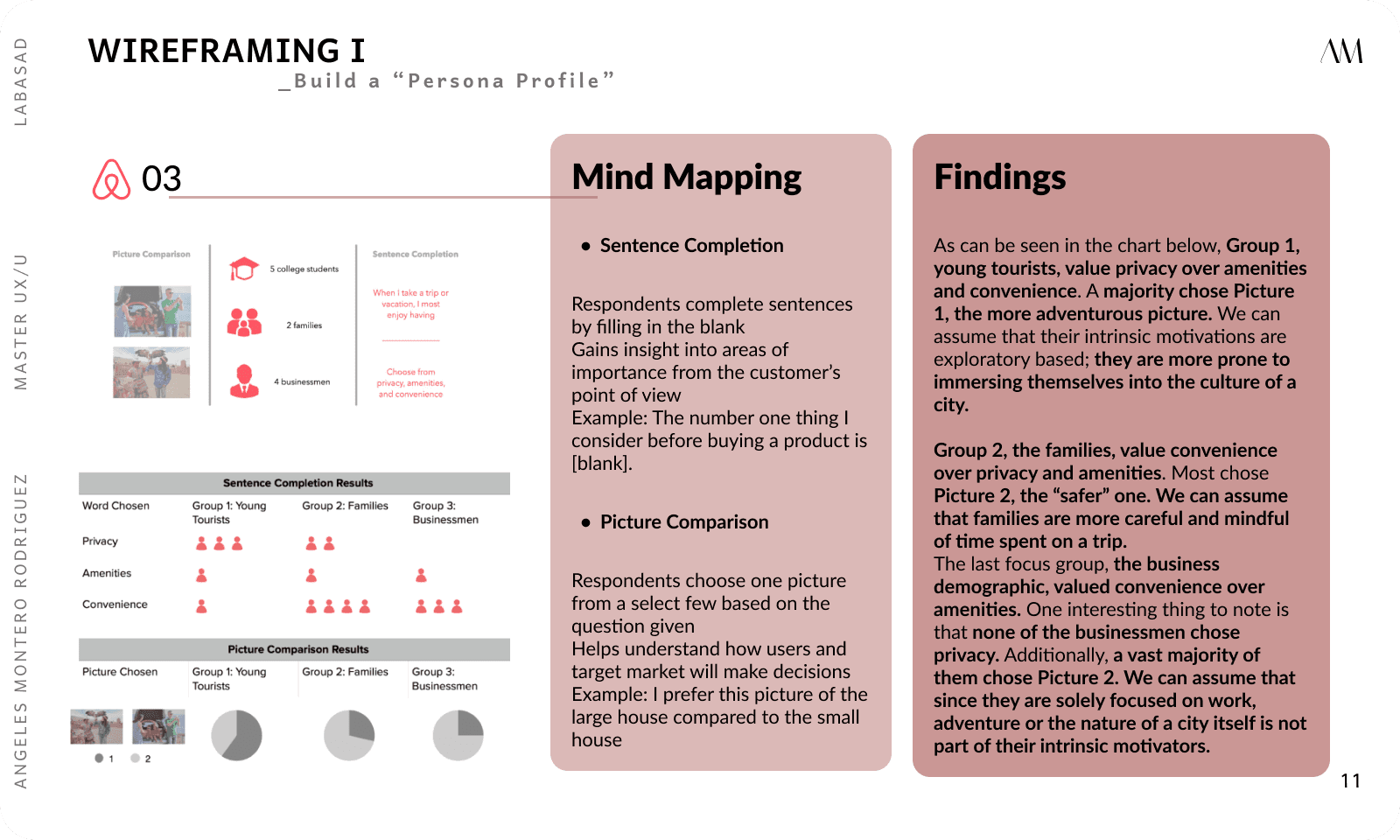
Mind Mapping: Visualized needs and behaviors of different traveler personas.
Key research findings
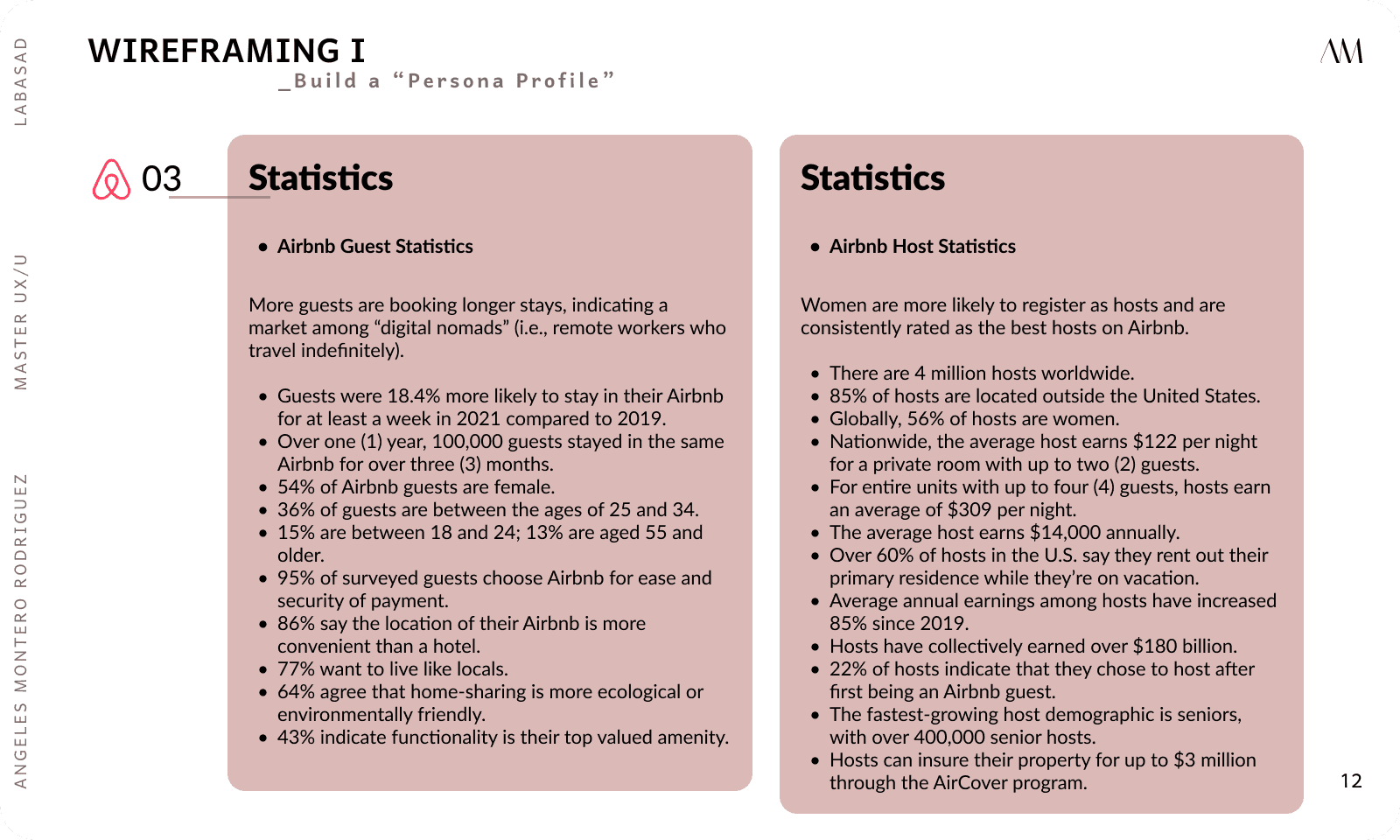
✨ Solo travelers feel unsafe during their stays.
✨ Users struggle with emergency support.
✨ Language barriers affect communication.
✨ The hosts lack guest background details.
Personas
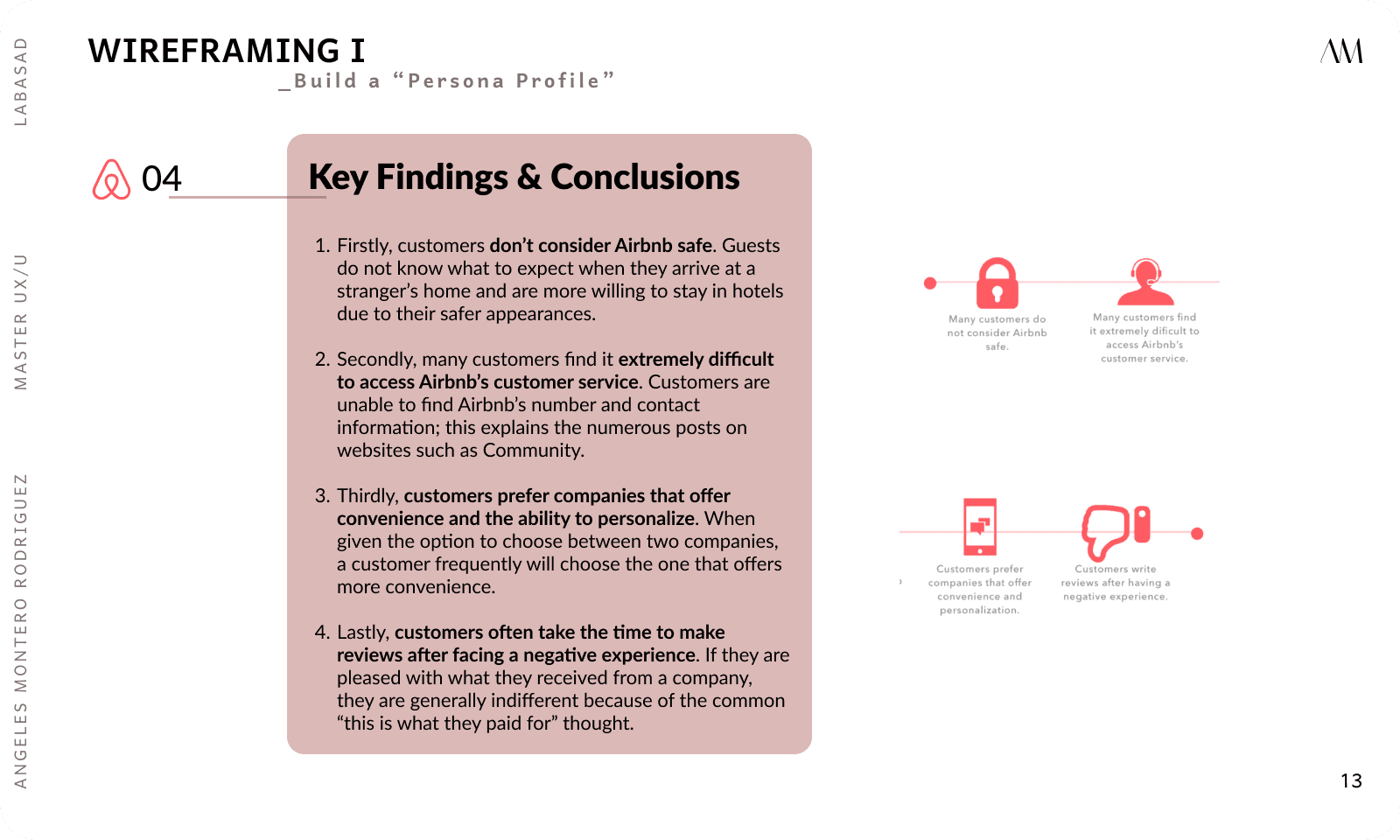
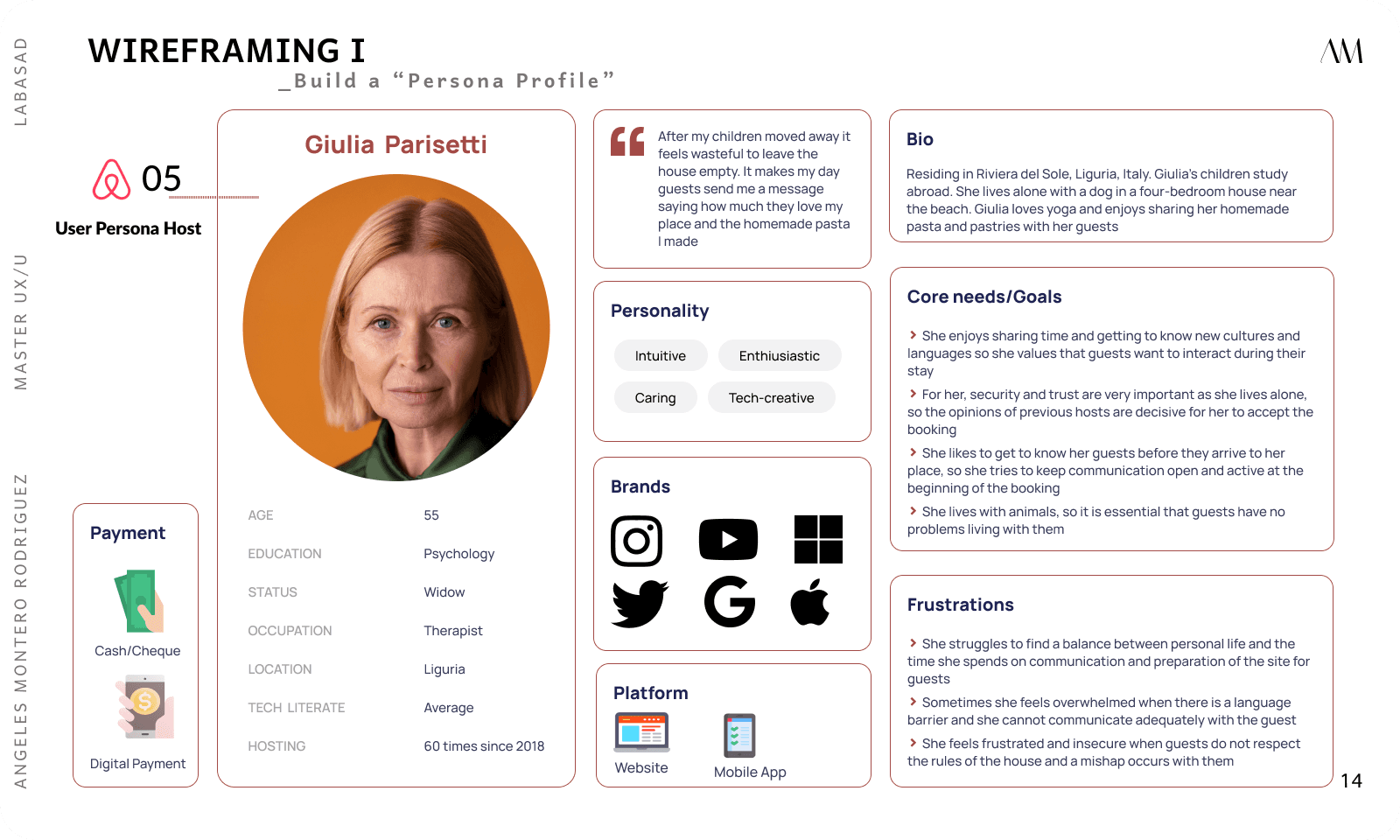
✧ Giulia (Host): Values guest security and interaction.
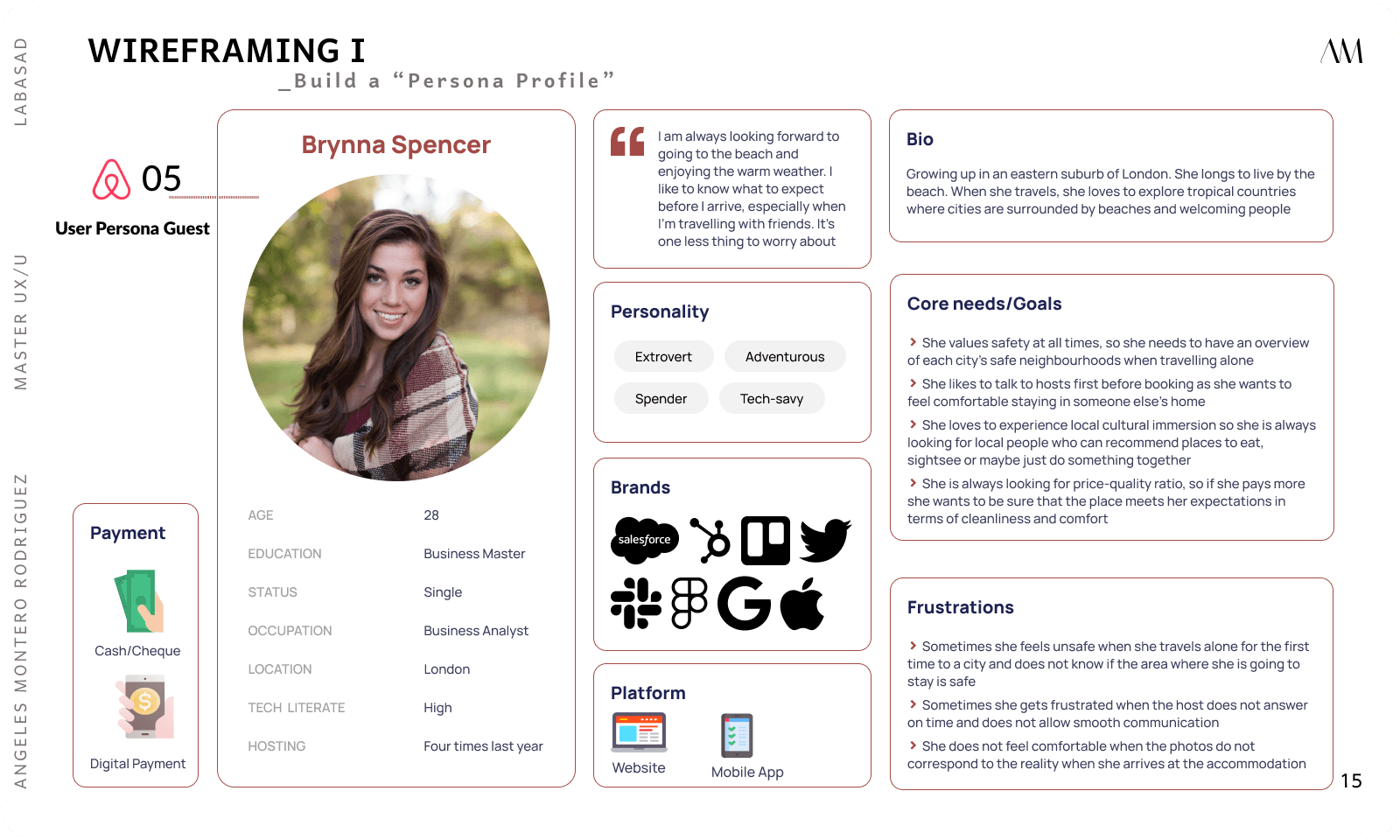
✧ Brynna (Solo Traveler): Seeks safety, local experiences, and clear communication.
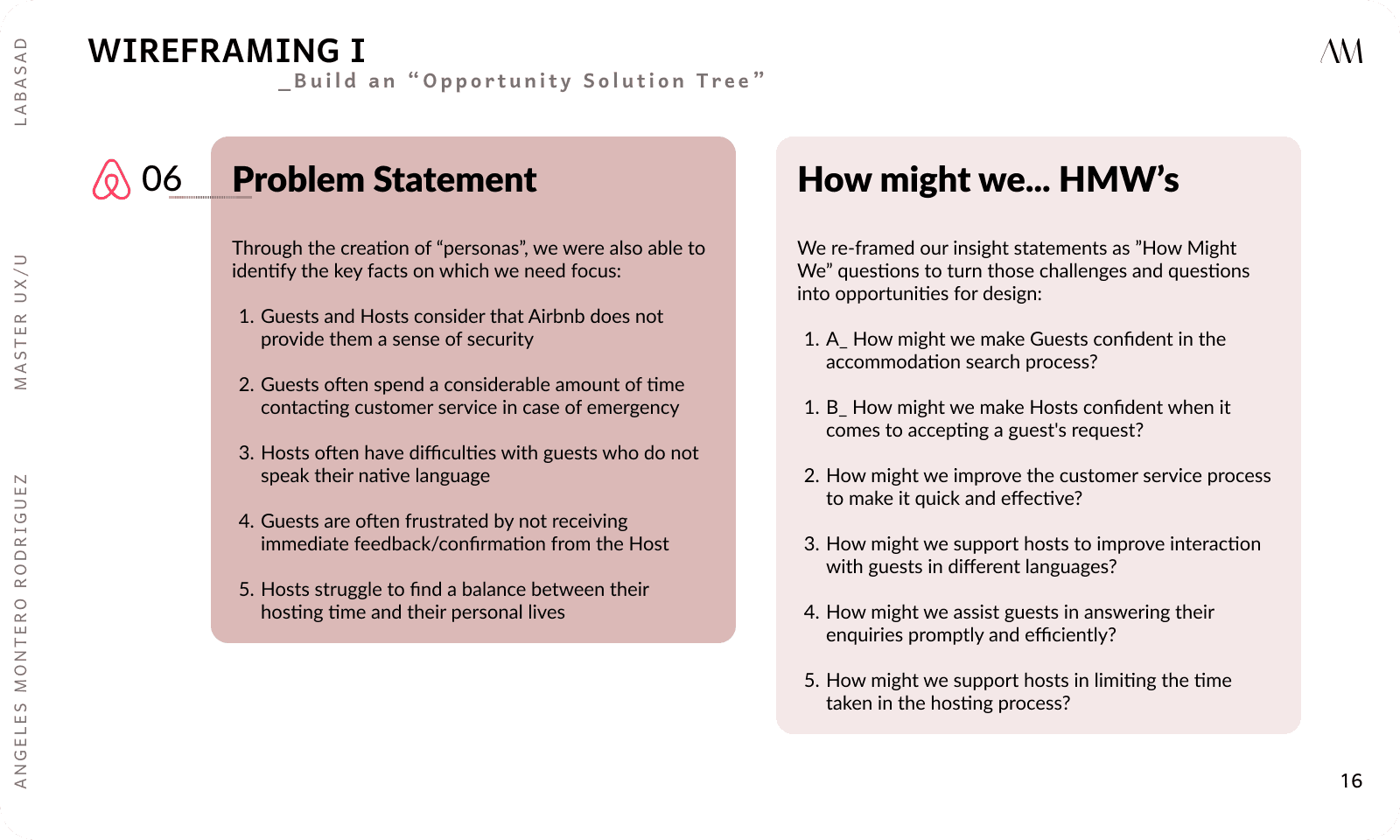
Problem Statement
Through user research, the following key challenges were identified:
🔴 Lack of a sense of security for both guests and hosts.
🔴 Difficulties in accessing Airbnb’s customer service during emergencies.
🔴 Language barriers that complicate communication.
🔴 Slow response times from hosts, frustrating guests.
🔴 Hosts struggle to balance personal time and hosting duties.
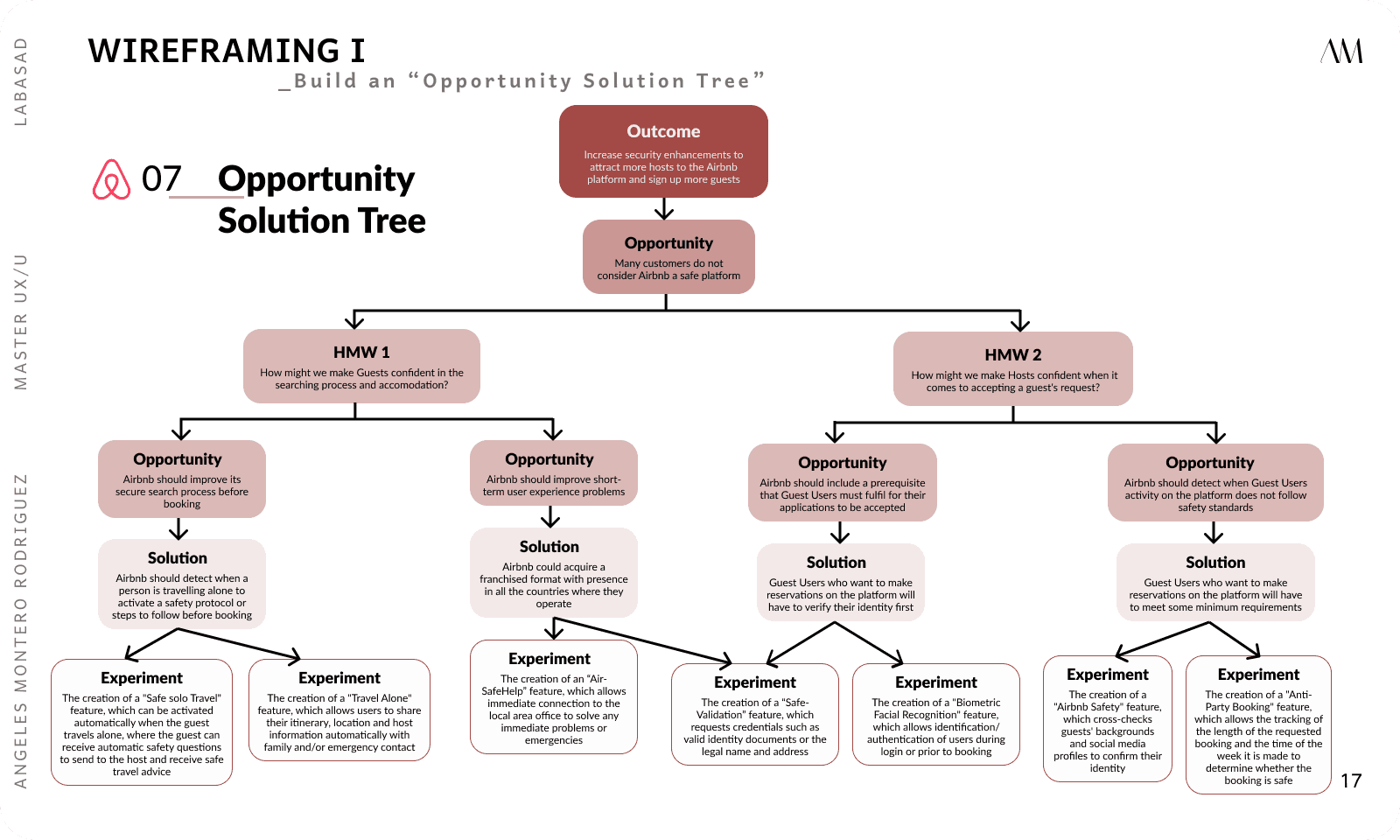
Opportunity Solution Tree
Identified key opportunities to enhance security and confidence in Airbnb’s user experience:
Guest Confidence in Booking: Introduce safety-focused features.
Host Confidence in Accepting Requests: Improve user validation.
Enhancing Customer Service Efficiency: Faster support options.
Supporting Multi-language Communication: Integrated translation tools.
Time-Saving for Hosts: Automated responses and verification tools.
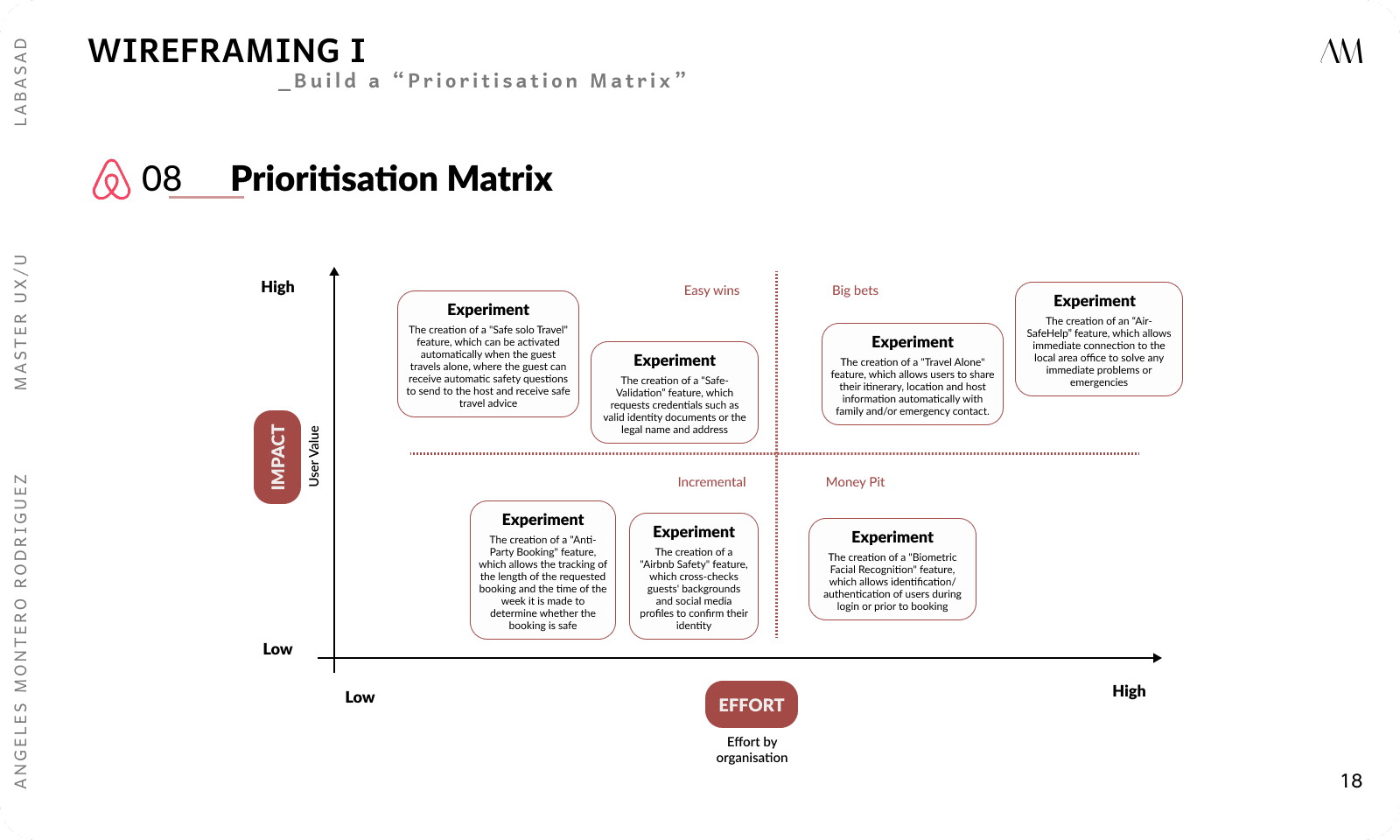
Prioritization Matrix
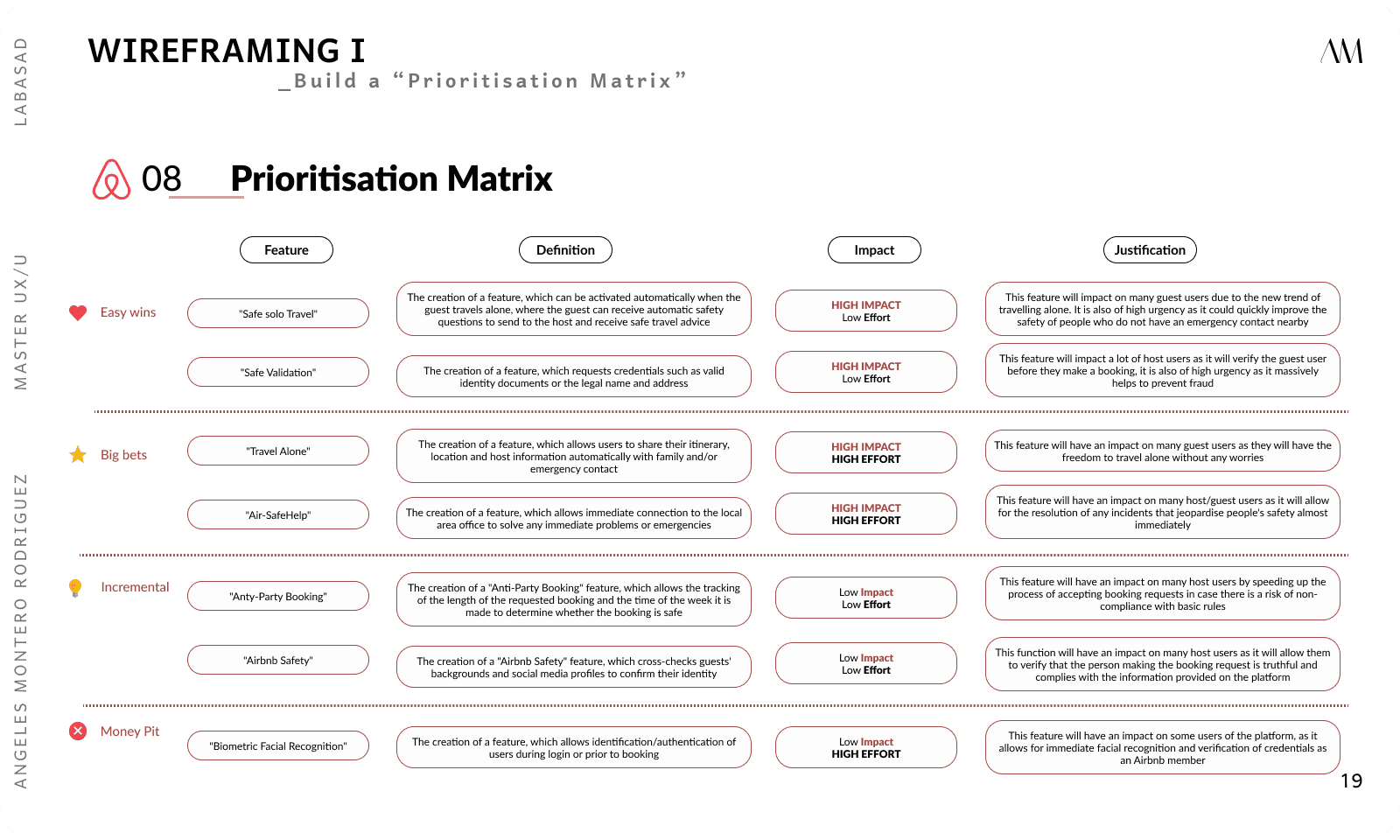
A strategic approach was used to categorize potential features based on impact and effort:
High Impact, Low Effort: Emergency contact sharing, neighborhood safety ratings.
High Impact, High Effort: Biometric verification, automated guest vetting.
Low Impact, Low Effort: Improved FAQs, clearer safety policies.
Low Impact, High Effort: Expanded Airbnb Safety personnel verification.
Solution concept
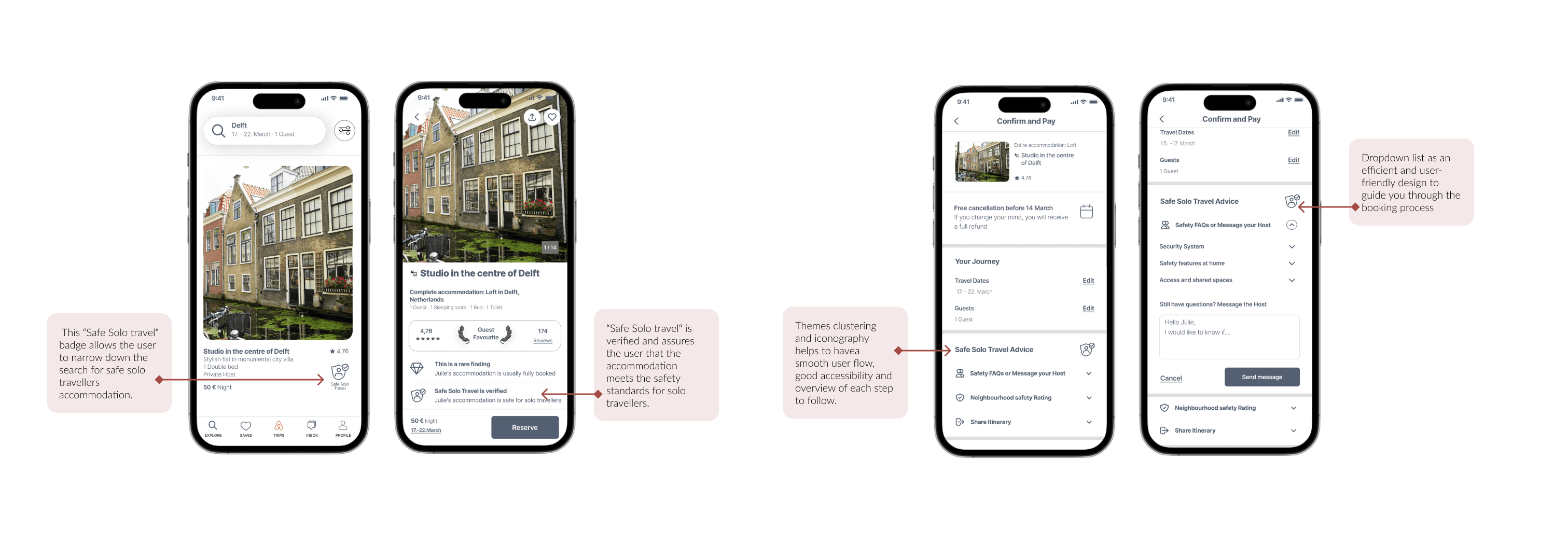
“Safe Solo Travel” Feature
Designed with insights from research, this feature offers:
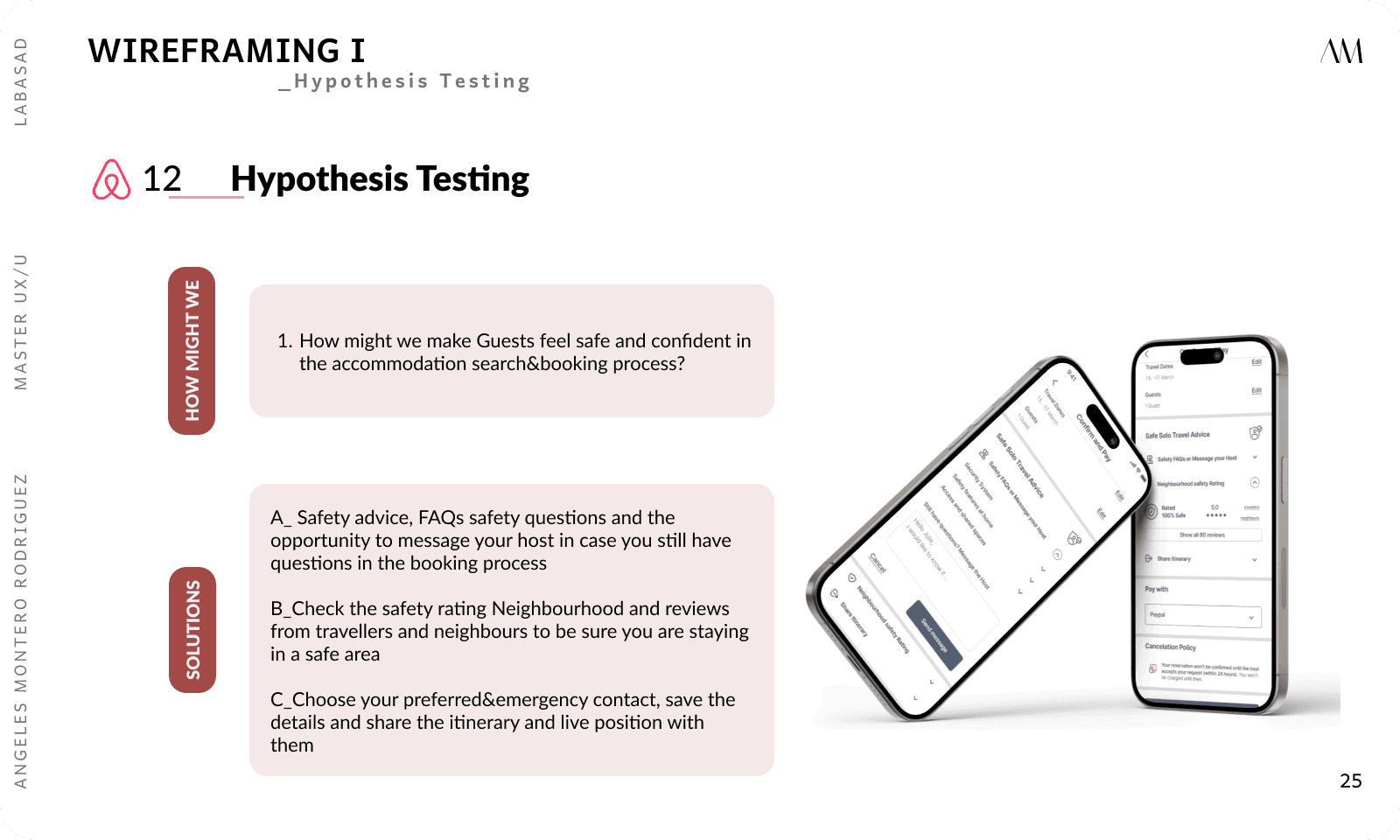
✧ Safety Advice & FAQs: Quick answers to safety concerns.
✧ Neighborhood Safety Ratings: Insights from local reviews.
✧ Emergency Contact Sharing: Share itinerary and location with trusted contacts.
✧ Enhanced Host Communication: Streamlined messaging for safety queries.
Wireframes & Prototype
Testing and results
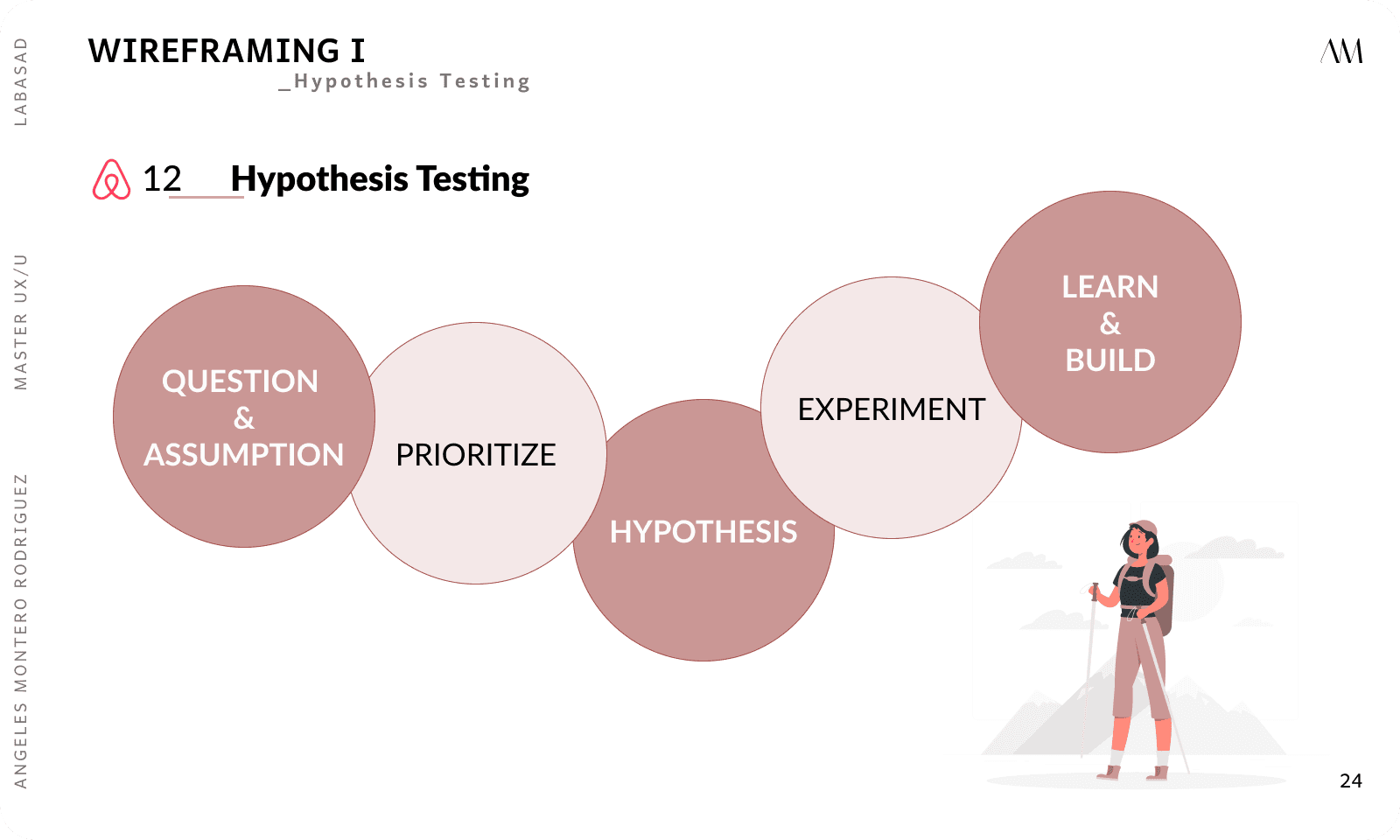
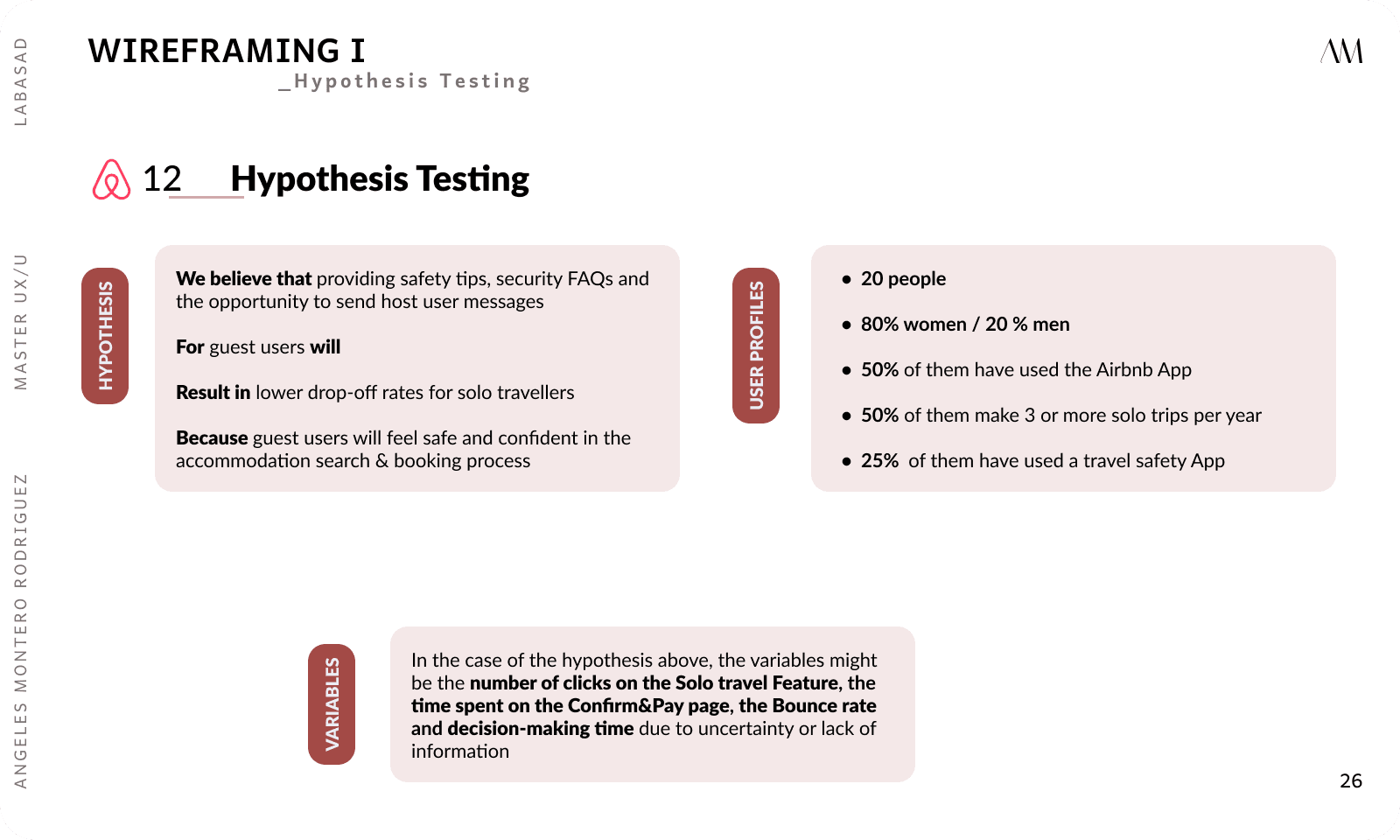
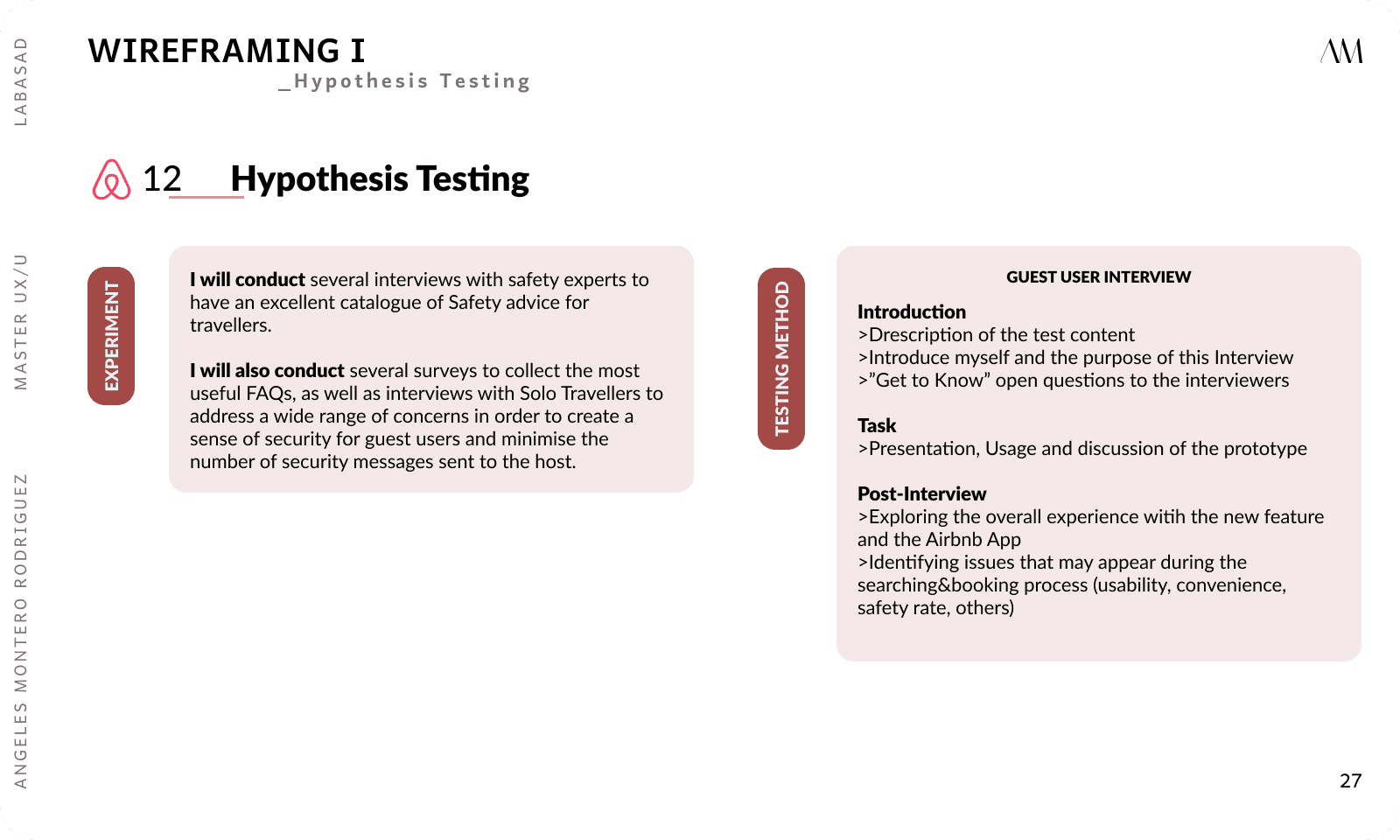
Hypothesis Testing
Adoption Rate: Strong engagement from solo travelers.
Time on Task: Faster booking completion.
Net Promoter Score (NPS): Improved satisfaction.
Success Metrics
🔵 Understand User Concerns: Identify solo travelers' pain points.
🔵 Align with Business Needs: Focus on safety to enhance Airbnb’s value.
🔵 Drive Measurable Impact: Develop solutions based on data.
Conclusions & impact
✦ UX research was pivotal in aligning user needs with business goals.
✦ Solo travelers value personalized, proactive safety tools.
✦ Research-driven design decisions create measurable impact